
It’s late. You’re exhausted. You just want to get some sleep. And the internet at 2 a.m. is mostly strangers with opinions.
Start at babysleep.com instead. It is free, and it is run by the Pediatric Sleep Council — an international team of physicians, psychologists and researchers who study sleep in young children for a living. No sign-up, no program to buy.
Why Newborn Sleep Is So Broken Up
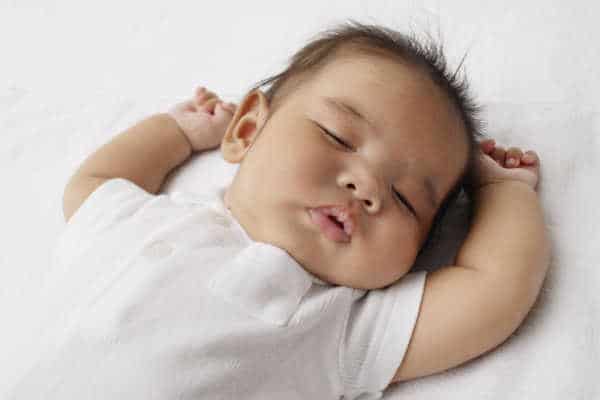
Your baby is not sleeping badly. Your baby is sleeping like a newborn.
Nemours KidsHealth reports that newborns sleep 14 to 17 hours in a 24-hour period, with some sleeping 18 or 19 — but they take it in short pieces. A breastfed baby feeds about every two to three hours and a bottle-fed baby about every three to four, and a newborn stomach cannot hold enough to go much longer. Nemours also notes that some babies begin sleeping five- or six-hour stretches around two to three months, and that the range of normal is wide.
That changes what you are trying to fix. In the early weeks you are not training anything. You are feeding a baby who needs feeding, and the long stretches arrive on their own schedule.
What You’ll Find on babysleep.com
The site is organized by your baby’s age, month by month from birth to 36 months, so you are not reading toddler advice while holding a three-week-old. Alongside that it sorts advice by problem: schedules, naps, night waking, sleep environment, safety and sleep training.
You’ll also find expert videos, current research, book recommendations, a sleep center locator, and a free Baby Sleep Score tool that tells you how your baby’s sleep compares.
“Sleep affects every aspect of a baby’s as well as a family’s well-being, including mood, learning, and health. Yet, approximately one-third of parents report their child has a sleep problem,” says Dr. Jodi Mindell, PhD, a psychologist in the Division of Pulmonary and Sleep Medicine at Children’s Hospital of Philadelphia, associate director of the CHOP Sleep Center and chair of the Pediatric Sleep Council. “We created babysleep.com to bring awareness to this common problem and provide education and resources to help.”
Much of it works for older children too, so the site does not expire on your baby’s first birthday.
Safe Sleep Comes First, Whatever Advice You Try
Before you try any technique, the American Academy of Pediatrics sets the floor:
- Put your baby on their back for every nap and every night. The AAP notes that side sleeping carries the same risk as stomach sleeping.
- Use a firm, flat surface — a crib, bassinet, portable crib or play yard that meets CPSC standards — with a tight-fitting mattress and a fitted sheet.
- Keep pillows, quilts, bumper pads and loose blankets out of the sleep space.
- Share a room, not a bed, for at least the first six months. The AAP says room sharing can cut SIDS risk roughly in half.
- Offer a pacifier at naps and bedtime, once breastfeeding is established.
- Swaddle loosely if you swaddle, and stop when your baby starts trying to roll, usually around three to four months.
If a tip you read anywhere asks you to break one of these, skip the tip.
What’s Normal, and When to Call
Normal looks like waking every two to three hours to eat, 14 to 17 hours of sleep spread across the day and night, days and nights mixed up at first, and a longer stretch showing up somewhere between two months and much later.
Call your pediatrician if:
- Your newborn is hard to wake for feedings. Nemours advises waking a newborn every three to four hours to eat until weight gain is well established.
- Your baby snores, gasps, or pauses in breathing while asleep.
- Your baby has fewer than six wet diapers a day after the first week, or is not gaining weight — the AAP’s markers that a baby is getting enough milk.
- Your baby’s sleep changes suddenly and sharply, much more or much less than usual.
And one for you, not the baby. If you are having thoughts about harming yourself or your baby, or you feel sad or hopeless and it is not lifting, call your provider today. The CDC’s HEAR HER campaign lists that as an urgent maternal warning sign at any point in the first year after birth. Exhaustion is expected. That is different.
Common Questions
Is babysleep.com Free?
Yes. The Pediatric Sleep Council publishes the whole site at no cost, including the videos and the Baby Sleep Score tool. There is no membership and nothing to buy.
How Much Should My Newborn Be Sleeping?
Nemours KidsHealth puts it at 14 to 17 hours over 24 hours, with some newborns sleeping up to 18 or 19. It comes in short stretches broken up by feedings, and that is what it is supposed to look like.
When Will My Baby Sleep Through the Night?
Some babies manage five or six hours in a row around two to three months, according to Nemours, but the spread is enormous and later is still normal. A five-hour stretch counts as “through the night” at this age.
Can I Start Sleep Training a Newborn?
Not in the first weeks. Your newborn needs to eat every few hours, and your pediatrician will want steady weight gain first. Ask at your next well visit when it makes sense for your baby.
Is It Safe to Let My Baby Sleep in a Swing or Car Seat?
Not for sleep. The AAP’s rule is a firm, flat surface that meets CPSC standards. If your baby falls asleep in a swing or a car seat, move them to the crib or bassinet when you get the chance.
Still awake? Read Sleep Training 101 next — it picks up where this leaves off, once your baby is old enough.
References
- Pediatric Sleep Council, babysleep.com.
- Children’s Hospital of Philadelphia, Jodi A. Mindell, PhD.
- Nemours KidsHealth, Sleep and Your Newborn.
- American Academy of Pediatrics, HealthyChildren.org, How to Keep Your Sleeping Baby Safe.
- American Academy of Pediatrics, HealthyChildren.org, How to Tell if Your Breastfed Baby is Getting Enough Milk.
- CDC HEAR HER, Urgent Maternal Warning Signs.